
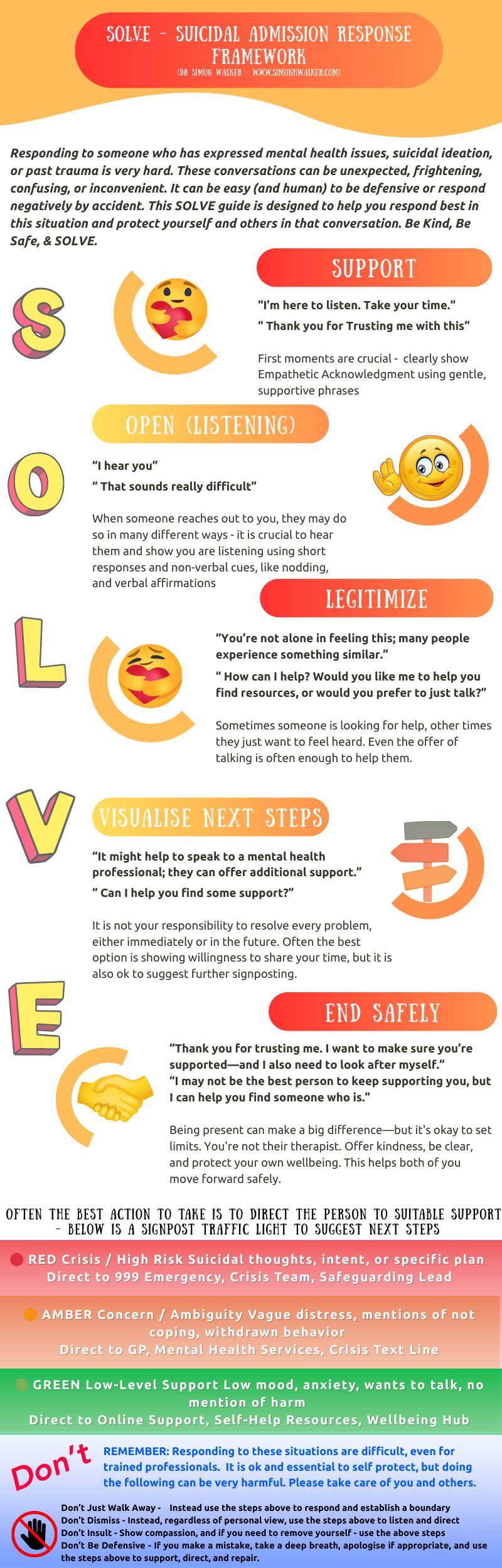
When someone says they are suicidal, the first response matters.
SOLVE is an early-stage research programme developing a brief, practical and training-independent framework for people responding to disclosures of suicidal distress in Scottish workplaces and communities.
The proposed study asks whether SOLVE can become an evidence-informed, consensus-agreed, safe, acceptable and measurable resource for that first conversation.
SOLVE at a glance
- Support: respond with empathy and give the disclosure proper attention.
- Open: listen without rushing, judging or trying to fix everything.
- Legitimize: acknowledge the person’s distress and ask what support would help.
- Visualise next steps: identify proportionate support, signposting or escalation.
- End safely: agree what happens next while recognising the responder’s limits and boundaries.
Research status: SOLVE is an early working prototype. It has not yet been validated or approved for operational use and does not replace emergency, safeguarding or specialist mental-health support.
Why SOLVE is needed
Suicidal distress is often first disclosed outside clinical services. A colleague, manager, friend, volunteer or family member may suddenly find themselves receiving a disclosure without specialist training and without knowing what to say next.
Existing suicide-prevention training can be valuable, but it cannot be assumed that everyone receiving a disclosure will have completed it, remember it or have immediate access to a trained professional. SOLVE is being developed for that gap: the first conversation, at the point of disclosure.
What SOLVE is designed to help people do
- Stop and give the disclosure proper attention.
- Listen without rushing, judging or trying to solve everything.
- Validate the person’s distress without minimising it.
- Avoid dismissive, harmful or overly defensive responses.
- Offer immediate, proportionate support.
- Identify a safe next step and signpost or escalate appropriately.
- Recognise the responder’s role, limits and boundaries.
- Bring the immediate conversation to a safe and supported close.
What SOLVE is not
SOLVE is not a clinical assessment, diagnostic tool or substitute for emergency and specialist mental-health services. It is not intended to replace safeguarding procedures, suicide-prevention training, Mental Health First Aid, ASIST or professional judgement. Its purpose is narrower: to support a safer first response while appropriate help and next steps are identified.
How SOLVE will be developed
The proposed 36-month development and feasibility study has five connected stages:
1. Evidence review and resource mapping
Reviewing existing evidence, guidance and resources to establish what is already available, what appears helpful and where important gaps remain.
2. Lived-experience and organisational involvement
Working with people who have disclosed suicidal distress, people who have received disclosures, and organisations responsible for workplace and community support. This stage will shape the language, boundaries, accessibility, emotional safety, safeguarding and practical use of SOLVE.
3. Expert consensus
Using a Delphi process with approximately 30 to 40 experts to test and agree the content, with a proposed agreement threshold of at least 70%.
4. Prototype development
Producing a manualised SOLVE prototype with clear wording, intended use, boundaries, signposting and safeguarding arrangements.
5. Feasibility testing
Testing the prototype across three to four sites with approximately 40 to 60 participants, supported by follow-up measures and interviews or focus groups. The purpose will be to establish whether SOLVE can be used safely, consistently and acceptably before any larger evaluation.
Current status
SOLVE is currently an early-stage research concept. A 36-month development and feasibility study has been submitted for funding. The research has not yet begun, and SOLVE is not currently a validated or approved resource for operational use.
The final wording, boundaries, safeguarding, accessibility, signposting, emotional-safety and implementation arrangements must be developed and tested with lived-experience contributors, organisations and experts.
Project lead
Dr Simon H. Walker is Principal Investigator for SOLVE. The work is being developed through the Healthy Working Lives Group at the University of Glasgow.
The SOLVE Construction Bust
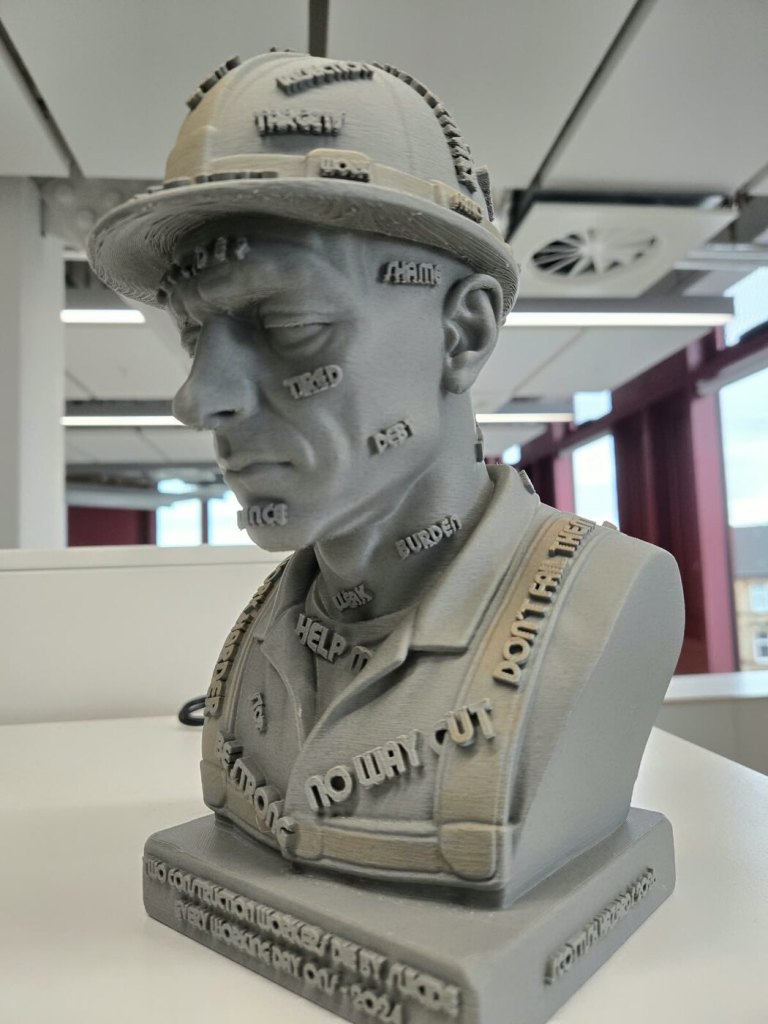
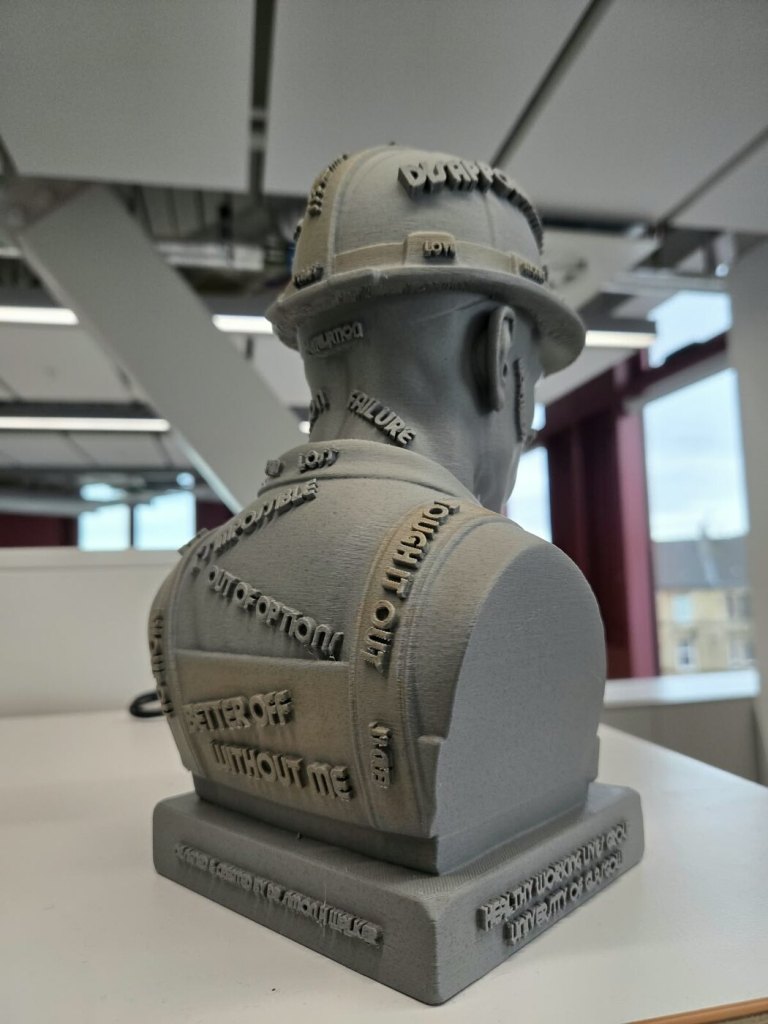
The SOLVE Construction Bust turns hidden workplace pressures into something visible and difficult to ignore. Words associated with pressure, exhaustion, isolation, anxiety, shame, failure and suicidal thoughts are built into the figure of a construction worker, creating a physical prompt for conversations about work, distress and help-seeking.
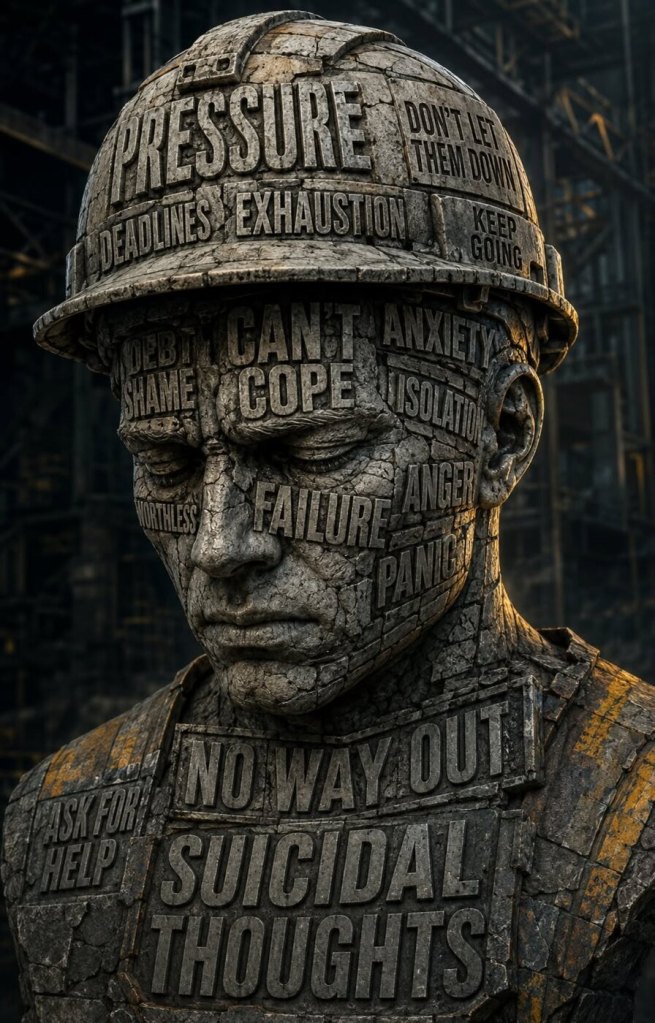
From concept to physical prototype
The first 3D-printed prototype translates the concept into a physical public-engagement object. The raised language across the helmet, face and workwear represents pressures that may be carried silently and creates an opening for conversations that can otherwise be difficult to begin.
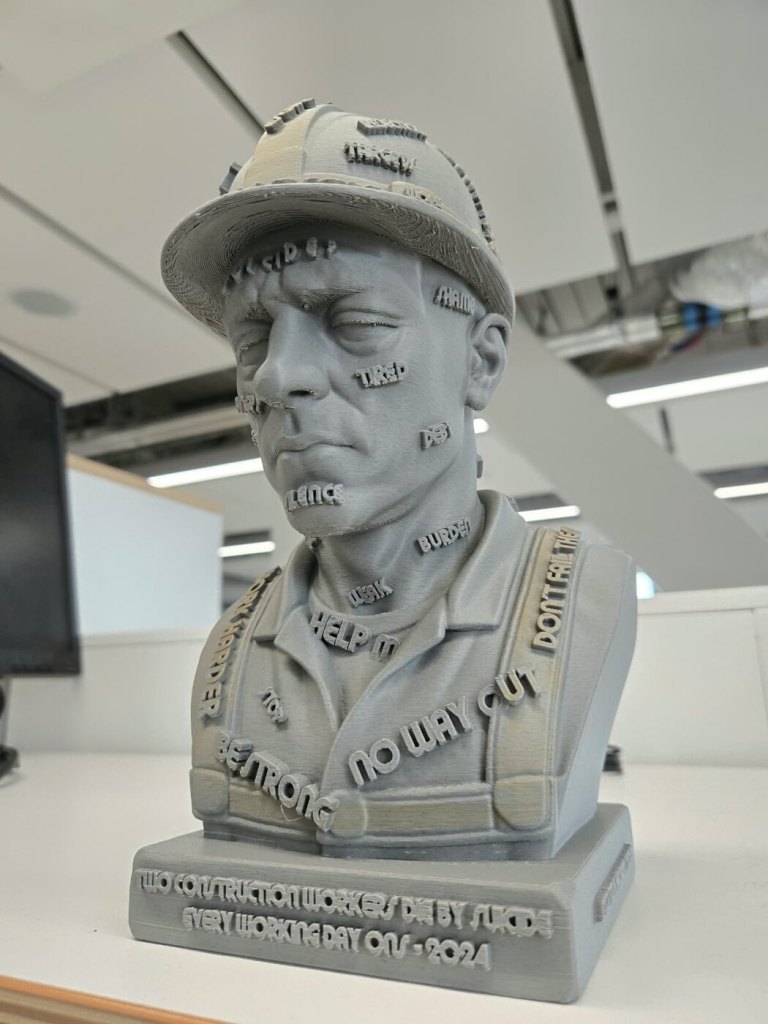
Scottish Parliament, 2026
The SOLVE Construction Bust will be featured at the Scottish Parliament in 2026 as part of a Scottish Hazards event marking World Suicide Prevention Day on 10 September 2026.
The display will use the physical sculpture to make hidden workplace pressures visible, encourage discussion about suicidal distress in construction and promote safer first responses.
Where SOLVE began
The first SOLVE concept was created in November 2024 following a personal experience in which a disclosure of suicidal distress was closed down at the moment support was needed. The original guide was an immediate attempt to turn that experience into something practical. It is the starting point for the research, not the finished intervention.

Download the working SOLVE framework
This one-page working framework sets out five prompts: Support, Open (listening), Legitimize, Visualise next steps and End safely. It also includes proportionate signposting and reminders about responder boundaries.
Research status: This downloadable framework is an early working prototype. It has not yet been validated or approved for operational use and should not replace emergency, safeguarding or specialist mental-health support.
Work with us
SOLVE will require involvement from people with lived experience, workplaces, community organisations, suicide-prevention specialists, occupational-health professionals and researchers. If you are interested in contributing to its development or discussing a future study site, please get in touch.
Need urgent support?
If someone’s life is at immediate risk, phone 999 or go to A&E. In Scotland, phone NHS 24 on 111 and choose the mental-health option for urgent mental-health support. Samaritans can be contacted free at any time on 116 123.

