

The New Year is typically a time of excitement and joy. For many, it is a time of family, friends, and fun, with drinks, games, and good food as the day’s focus. But not for all. For something is a time of difficulty, compounded by the frivolity of the time and the conception of global celebration. In truth, the celebration is by no measure particularly global, as individuals and families around the world face fear, poverty, isolation, uncertainty, and death.

However, there is currently no data to support the idea that the holidays are times of increase suicide actions or attempts. Personally, I remember when this time of year was a difficult one. To fair it still is, but I know that I have had much worse holidays. Still at no point was this time of year a point where I was focused on undertaking suicide. Back in 2015, during the worst Christmas and New Year (2016) I ever had I was low and alone, but Suicide was no longer an option. I had already attempted twice, and future attempts were coming, but at that time I had family and elements of support. I suppose it is important to state that even at my lowest, my most alone, I had someone (my sister, my partner, my best friend) to help me. Suicide in this period never seemed like an option. The time was too busy, to active, to allow me to focus on the issues I was facing.

Almost a decade later, I began to reflect on a compelling notion: that suicides may rise as one year transitions into the next. This idea often gains traction due to media narratives that link this period with feelings of isolation and the burden of New Year’s resolutions. However, it’s crucial to recognize that, contrary to popular belief, data does not substantiate a notable increase in suicides on New Year’s Eve or New Year’s Day (Baranov et al., 2017; Office for National Statistics, 2022; Centers for Disease Control and Prevention, 2022). As I delved deeper into the research, it became evident that the reality surrounding this issue is far more intricate and multifaceted than many assume.
Some research even points to a dip in suicide rates around major holidays like Christmas, with a possible uptick afterward (Baranov et al., 2017). But this pattern varies and isn’t so pronounced that we can say there’s always a post-holiday “surge” (Phillips & Barker, 2013). In fact, if you look at monthly or seasonal stats, December and January often record fewer suicides than spring, though individual circumstances can really shake things up (Woo et al, 2012).
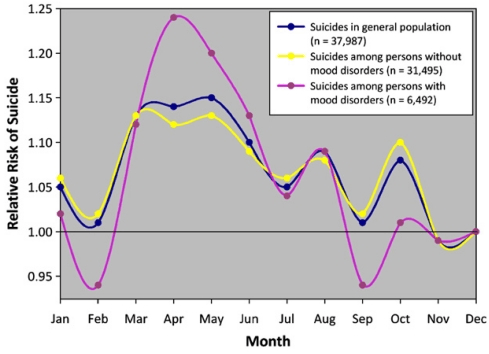
Assumptively, it’s easy to see why the end of the year might heighten stress or feelings of isolation—especially if you dread fresh starts or feel weighed down by the past year’s disappointments (Joiner, 2006). But for many people, holiday get-togethers offer a crucial buffer, allowing them to connect with loved ones and ward off more profound despair (Samaritans, 2021). Since official data are usually tallied by month or year, it’s tough to pinpoint precisely how many suicides take place around 1 January. What’s clear, though, is that no single day is the primary driver. It’s a complex puzzle of personal history, social ties (or lack thereof), financial pressures, relationship issues, and many other factors (World Health Organization, 2021).
So while it’s understandable that we might think New Year’s is a particular hot spot for suicides, the evidence just doesn’t back that up in a straightforward way. Suicide is, unfortunately, a year-round concern—and if there’s a takeaway here, it’s that we should stay vigilant and compassionate all the time, not just when the calendar changes.

Although research has not established a definitive surge in suicides specifically at the New Year, this does not negate the fact that some individuals may experience depression or suicidal ideation during this period—or at any other time of year. While large-scale datasets often indicate broader seasonal or monthly trends, individual circumstances can vary substantially, and mental health status can deteriorate for numerous reasons coinciding with the transition to a new year.
For certain individuals, emotional distress may intensify following the conclusion of holiday festivities, when heightened expectations or the perceived burden of unfulfilled goals becomes more apparent. Others may experience increased loneliness during this season, particularly if they are already contending with depression, anxiety, or related mental health difficulties. Consequently, although statistical analyses may not highlight New Year’s Eve or New Year’s Day as peak risk points, these findings do not diminish the genuine challenges faced by those who are especially vulnerable at this time—or at any point in the calendar.
Ultimately, suicidal thoughts and depression do not conform to specific dates or predictable patterns. Regardless of whether it is the start of the new year, mid-spring, or the height of summer, individuals experiencing feelings of hopelessness, isolation, or despair would benefit from reaching out for support. Although aggregate data may not reveal a marked spike around New Year’s celebrations, each person’s experience merits serious attention and empathetic understanding.

My own research has shown that often when people face depression or suicidal thoughts, they don’t always realize that My research has shown that when people experience depression or suicidal thoughts, they often do not realize the many avenues of support and self-care available to them—or how much these resources can make a difference.
Talking to someone is really important, and one of the most helpful steps can be to find a professional you trust, whether it’s a therapist or counsellor who can help you navigate difficult emotions. Talking to a friend or family member is almost always the first point of call, but sometimes the bravest and more effective thing to do is reach out and ask for help from a qualified expert. This can be tremendously helpful as sometimes simply knowing a qualified expert is in your corner can offer a sense of stability.
Equally important is surrounding yourself with supportive people. This doesn’t have to be an enormous network: even one or two individuals you can lean on—friends, family members, or even an online community—can help mitigate the sense of isolation that so often accompanies depression. Support groups, whether virtual or face-to-face, give you the chance to share experiences and find out you’re not alone in what you’re going through.
It also helps to learn coping techniques you can use in your daily life. Mindfulness exercises, like short meditations or guided breathing, can work wonders in calming that whirring mind. Pairing these with simple lifestyle habits—like regular exercise (even if that’s just a brisk walk around the block) and a balanced diet—provides physical benefits that, over time, can shore up your mental health too.
In terms of personal safety planning, it’s about being prepared. Having a list of emergency contacts, knowing the specific warning signs that your mental health is sliding, and quickly accessing crisis resources can literally save your life. It’s also important to remember self-compassion. Depression and isolation has a way of convincing you that you’re failing at everything, but by setting small, achievable goals, you can cut through that feeling of overwhelm. Celebrating those little wins can shift your perspective.
In the end, no single strategy fits everyone, and no journey looks exactly alike. But reaching out for professional support, confiding in someone you trust, or even trying out new coping tools can be the critical step that prevents a moment of crisis from turning into a tragedy. If you or someone close to you ever finds it too hard to go on, don’t hesitate to call a helpline or emergency services. Whether you make the call yourself or ask someone to do it for you, know that help is always out there—and you are worth that call.

Happy New Year, thanks for reading and if you need support you can reach out to the links below – or failing that reach out to me. Take care and be proud of where and who you are.
United Kingdom
- Samaritans
- Website: www.samaritans.org
- 24/7 Helpline: 116 123 (free to call)
- Provides round-the-clock, confidential support for anyone in distress or at risk of suicide.
- Mind
- Website: www.mind.org.uk
- Information on mental health conditions, support services, and tips for those in crisis.
- Shout (Crisis Text Line)
- Website: giveusashout.org
- Text SHOUT to 85258
- 24/7 text service for anyone struggling to cope.
- NHS 111 (Non-Emergency Medical Advice)
- Website: www.nhs.uk/using-the-nhs/nhs-services/urgent-and-emergency-care/nhs-111/
- For urgent (but not life-threatening) medical advice or referrals to mental health crisis teams.
- Rethink Mental Illness
- Website: www.rethink.org
- Offers advice, support, and information for people living with mental illness and their carers.
- Childline (for Under 19s)
- Website: www.childline.org.uk
- 24/7 Helpline: 0800 1111
- Free, confidential support for children and young people.
United States
- 988 Suicide & Crisis Lifeline
- Website: 988lifeline.org
- Phone/Text: 988 (24/7)
- Provides free, confidential support for people in distress and crisis resources for you or your loved ones.
- National Alliance on Mental Illness (NAMI)
- Website: www.nami.org
- Helpline: 1-800-950-NAMI (6264)
- Information on mental health conditions, treatment options, and local support groups.
- The Trevor Project (LGBTQ+ Youth)
- Website: www.thetrevorproject.org
- TrevorLifeline: 1-866-488-7386 (24/7)
- Text “START” to 678678 or use chat services via the website.
- Specializes in crisis intervention and suicide prevention for LGBTQ+ youth.
- Substance Abuse and Mental Health Services Administration (SAMHSA)
- Website: www.samhsa.gov
- National Helpline: 1-800-662-HELP (4357)
- Offers confidential, 24/7 treatment referral and information for mental and/or substance use disorders.
- Veterans Crisis Line
- Website: www.veteranscrisisline.net
- Phone/Text: Dial 988, then Press 1
- 24/7, confidential crisis support for veterans, service members, and their families.
Remember:
- If you or someone you know is in immediate danger, contact emergency services:
- 999 in the UK
- 911 in the US
- These organizations and helplines are here to provide support in crisis situations and beyond. You are not alone; help is available.
 Occupational Health Research, Historical Study & Suicidology - Dr Simon H. Walker
Leave a comment