
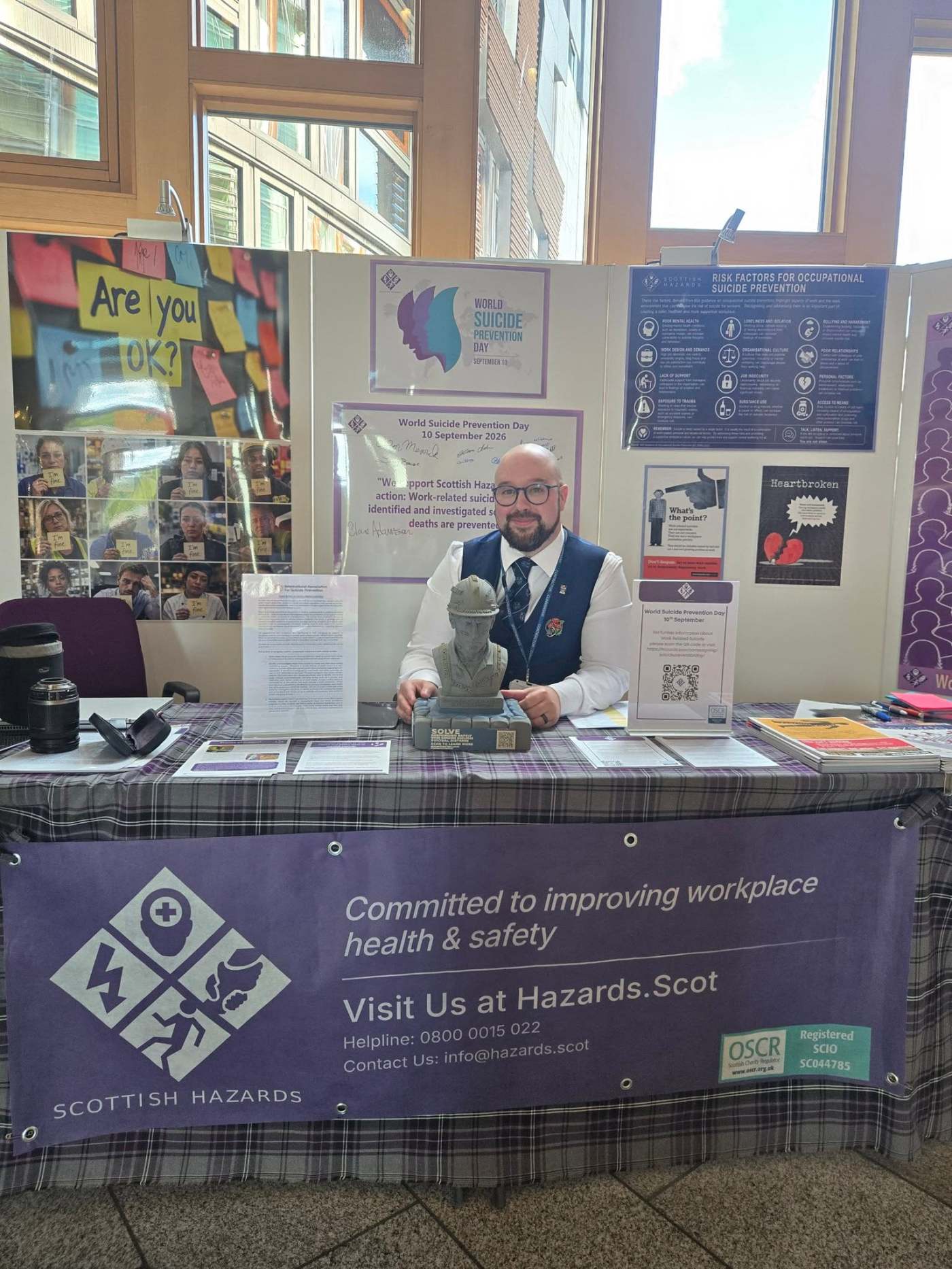
On World Suicide Prevention Day, I want to ask a question about what happens after someone does what we have encouraged them to do.
They tell someone they are struggling. They speak about their suicidal thoughts. They ask for help.
What happens next?
Much of my own work focuses on recognising distress, supporting that first conversation and helping someone towards immediate safety. I believe in that work. But it also means I need to question what happens beyond it. When we advise someone to contact a support service, what are we directing them towards? Someone who will listen? An assessment? Treatment? A waiting list?
Those are different things.
We cannot judge suicide prevention only by whether someone starts a conversation. We need to know whether that conversation leads to appropriate support, whether it helps, and what happens to people who do not get through.
A referral is not the same as receiving care.
What does “getting help” mean in Scotland?
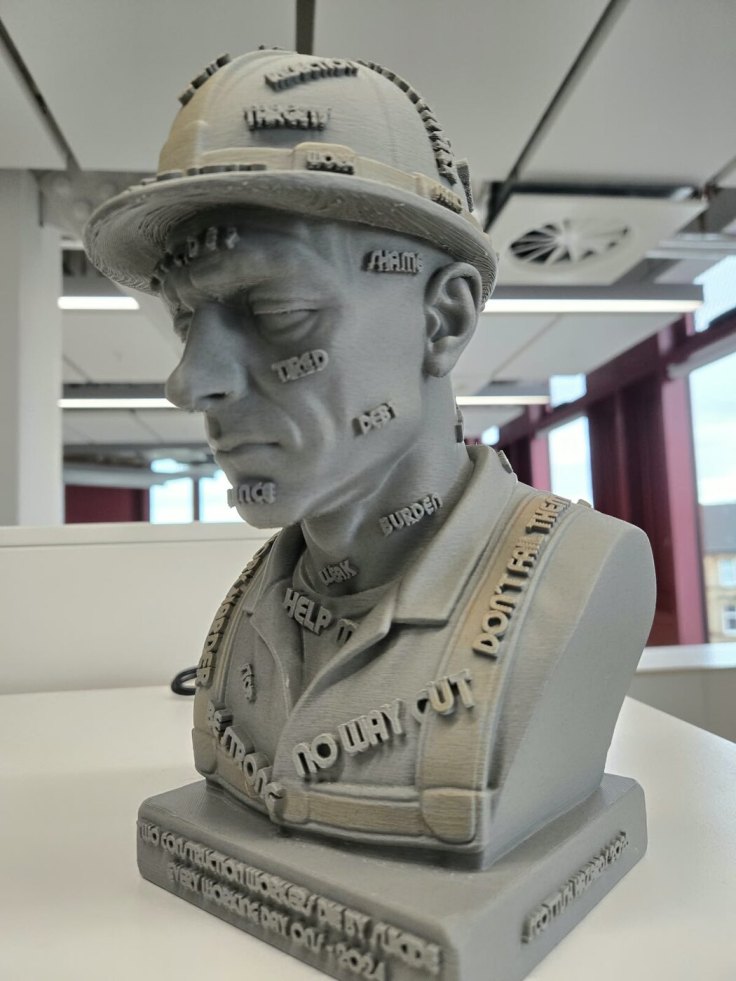
There is no single service that meets every need. For adults, support can include primary care, urgent assessment, listening services, brief interventions and longer-term treatment. The examples below are not a complete directory. GPs are a common starting point, with specialist support accessed through referral and assessment. Local provision varies. (Audit Scotland, Adult mental health (2023))
NHS 24’s Mental Health Hub is available through 111, 24 hours a day, including for urgent support when a GP practice or usual mental health service is closed. Psychological wellbeing practitioners, supported by mental health nurses, assess needs and help people manage their situation or direct them towards appropriate support. This has a different role from a listening helpline. (Scottish Government, mental health unscheduled care resources, section 1.4)
Samaritans and Breathing Space offer space to talk about distress. Samaritans is available around the clock; Breathing Space provides out-of-hours listening, information and advice for people aged 16 and over in Scotland. These services have a different role from ongoing clinical treatment. (Scottish Government, support resources)

Distress Brief Intervention, or DBI, provides short-term, non-clinical support for people in distress who do not require urgent clinical treatment and are assessed as suitable. Referral is through trained frontline services, including NHS 24. The model aims for contact within 24 hours and problem-solving and distress-management support for up to around 14 days. These are service-model expectations, not proof that every referral results in successful contact or support of an identical duration. (Scottish Government, DBI referral and support model)
SAMH’s Nooks in Glasgow and Aberdeen offer free, walk-in mental health support in non-clinical settings, seven days a week, without an appointment. They provide another entry point, although they are not a Scotland-wide substitute for clinical crisis care. (SAMH, The Nook)
Support also extends beyond healthcare. Scotland’s published resources include community activities, befriending and practical assistance, such as benefits advice. ALISS helps identify local services and resources. (Scottish Government, community support and ALISS)
The question is not simply whether support exists. It is whether the person reaches the support that meets their needs.
What does the evidence tell us?
We need to distinguish between feeling heard, feeling less distressed, receiving treatment and experiencing sustained improvement. All matter. They do not measure the same thing. The example below is not a comprehensive review of the effectiveness of every service listed above.
A 2022 evaluation examined DBI’s extension through NHS 24 during May to December 2020. It reported that 76% of 991 cases with paired scores had a reduction of at least one point in distress between the start and end of Level 2 support. This was not a result for everyone referred. (Duncan and Cowie, Evaluation of the Extended Distress Brief Intervention Programme (2022), sections 1.2.6 and 4.4.1)

These before-and-after service data are encouraging, but do not establish how much change DBI caused, sustained benefit, or a reduction in suicide risk. The evaluation concerned distress more broadly, not an exclusively suicidal group. (Duncan and Cowie, Evaluation of the Extended Distress Brief Intervention Programme (2022), p. 8)
The separate original DBI pilot evaluation described both successful onward connections and interviewees who felt low or isolated while waiting after brief support ended. These accounts establish that such experiences occurred, not their frequency across Scotland or that waiting caused deterioration. (Scottish Government, Distress Brief Intervention pilot programme: evaluation (2022), section 7.2.6)
Both findings matter. A useful intervention and a difficult handover can exist in the same person’s experience.
What happens when someone does not meet a service’s criteria?
Not meeting a particular service’s criteria should not be treated as a judgement about whether someone’s suffering counts.
Not needing emergency care is not the same as not needing care.
Audit Scotland’s 2023 review documented slow and complicated access, difficulties for people who did not meet specialist-service thresholds, and variation in alternatives. It also identified weaknesses in information about the quality and outcomes of adult mental health care. These are historical findings about adult mental health services generally, not a current national estimate of unmet need among people seeking help specifically for suicidal distress. (Audit Scotland, Adult mental health (2023))
They nevertheless raise a question we need to answer: what happens to people whose needs fall outside a particular service’s remit?
Some may receive a suitable alternative. Some may improve without specialist treatment. Others may continue struggling without adequate support. We should investigate all those possibilities, rather than treating either a declined referral or a completed appointment as the end of the story.
The DBI pilot evaluation warned that onward-service availability and waiting lists needed consideration when expanding the programme. (Scottish Government, Distress Brief Intervention pilot programme: evaluation (2022), section 9.2)
My concern is that improving the first response, without addressing capacity further along the pathway, may leave the next step unresolved.
My concern is not that every disclosure should result in hospital admission. It is that a decision not to admit someone, or not to accept a referral, should leave them with an explanation and a workable next step.
“Not this service” should not become “no support”.
How would we know whether the system is working?
It would be wrong to suggest that Scotland measures only waiting times. Public Health Scotland’s 28 July 2026 mental health quality-indicator release includes seven-day follow-up after psychiatric discharge, 28-day emergency readmissions, missed community appointments and national survey-based measures of support and quality of life. These are official statistics in development. They describe important parts of care, but do not themselves follow everyone from a first request for help with suicidal distress. (Public Health Scotland, Mental health quality indicator profile, 28 July 2026)
The Scottish Government also states that it is working with Public Health Scotland and the Mental Health Unscheduled Care Network to understand how people access and receive unplanned care. Any new research should build on that work, not assume it does not exist. (Scottish Government, mental health unscheduled care)

For me, the test has five parts: can people access appropriate support; do the different parts of care connect; does support improve their situation; what happens to their safety; and are these outcomes equitable?
An answered call does not establish that ongoing needs were met. Equally, another call does not automatically mean the first contact failed. It might represent someone using support appropriately.
We need to understand the person’s circumstances, not simply whether their service use went up or down.
Above all, we need to include people who never reach treatment. Otherwise, we risk evaluating the support available to those who get through while overlooking the barriers experienced by those who do not.
A proposal: follow the person, not just the referral
I would like to propose a Scottish research programme examining access, continuity and outcomes after help-seeking for suicidal distress.
Its central question would be:
When adults in Scotland seek help for suicidal distress, what support do they receive, how do their circumstances change, and where do needs remain unmet?
The study would pay particular attention to people assessed as not requiring emergency care, those whose specialist referrals are declined, and those whose brief support ends while further needs remain. These are different situations and should be examined separately.
This would be research into how the pathway functions, not an attempt to prove in advance that it is failing.
The 2022 DBI pilot evaluation already recommended research into onward-service uptake and longer-term outcomes. Our proposal would build on that recommendation across multiple entry points, including people who never enter a particular programme. The initial review would establish what subsequent research has already answered before claiming a new evidence gap. (Scottish Government, Distress Brief Intervention pilot programme: evaluation, recommendation 15)
Start by establishing what we already know. The first phase would bring together existing evaluations, routine data and local service arrangements. It would map eligibility criteria, referral decisions, waiting periods, available interim support and responsibility at handovers.
This would identify which questions can already be answered and where additional research is needed. A feasibility stage in a small number of contrasting Scottish areas would test recruitment, follow-up and data access before the main study’s sample size was set.
Follow people from asking for help. I would propose a longitudinal mixed-methods study, combining repeated conversations and questionnaires with service information, initially involving adults aged 18 and over. Before recruitment, we would agree a clear definition of suicidal distress and the help-seeking episode being studied, rather than treating all emotional distress as equivalent.
Recruitment would need to include people approaching participating primary care, urgent-care and third-sector services, not only people accepted for treatment. Community partners could also help reach people whose attempts to get support never progressed into a formal referral. Their recruitment routes would be reported clearly; a community-recruited sample should not be presented as representative of all help-seekers in Scotland. Where permissions allowed, we would compare the recruited sample with information on eligible service contacts to understand who remained unrepresented.
The intended starting point would be the person’s first attempt to seek help during the episode being studied, reconstructed where necessary, rather than the date they finally reached a specialist service. We would record uncertainty where that timing or sequence could not be established reliably.
Brief follow-ups could take place after two weeks, one month, three months and six months. These timings would be refined with lived-experience partners and during feasibility work.
We would record what was offered, what was received, how long each step took, and why contact did or did not continue. Time to initial support and time to any needed continuing care would be measured separately. An assessment, a listening conversation, brief support and ongoing treatment would not be treated as interchangeable.

Measure what changes for the person. We would agree what counts as appropriate, timely support before recruitment, recognising that an appropriate timescale depends on the person’s needs. We would record the person’s priorities and clinical assessments separately, including disagreement. A service accepting a referral would not, on its own, define the support as appropriate. The study would examine distress, suicidal thoughts, wellbeing, daily functioning and whether people felt heard and able to obtain help. Measures would be chosen with lived-experience partners and clinicians, with the main outcomes agreed before the study began.
Interviews would reconstruct the journey: what helped, what became difficult, where responsibility was clear or unclear, and whether waiting or a handover changed how someone felt about seeking further help. Staff interviews would explore the constraints behind those experiences, including capacity and the availability of alternatives.
Subject to the necessary permissions and an agreed consent approach, we would explore secure linkage to service records. Feasibility work would establish which crisis contacts and outcomes could be identified reliably. We would not automatically classify recorded self-harm as a suicide attempt, and would report where intent or events outside services could not be established. Access and outcomes would also be examined across characteristics such as sex, age, deprivation, disability and location, with the limits of smaller groups made clear.
People who stop attending would not automatically be labelled as having “disengaged”. Someone may feel better and no longer want support. Someone else may give up because the route has become unmanageable. The study needs to distinguish those experiences.
Where outcomes remain unknown, that uncertainty must be reported. Missing follow-up is not evidence of recovery.
Use the findings to develop and test improvements. Lived-experience partners, practitioners and commissioners would help identify changes worth testing. Possibilities might include supported introductions to another service, clearer responsibility during waits, agreed check-ins, or a more coordinated transition when brief support ends.
These would be candidates for evaluation, not interventions we should declare effective before testing them. Any subsequent trial would test an improvement to usual support without deliberately delaying or withholding existing care.
The practical output should be more than another list of services. It should show where support connects, where it does not, who is affected, and what changes are feasible.
What this research could, and could not, tell us
Following people over time would help identify patterns in access, unmet need and outcomes. It would not automatically establish that waiting caused deterioration, or that one pathway caused improvement.
People entering different services may have different needs from the outset. Comparisons would therefore need to account for initial distress, previous care and relevant health and social circumstances. Remaining uncertainty would still need to be acknowledged.
Nor should an initial study promise to demonstrate a reduction in suicide deaths. Mortality outcomes would require a separate assessment of the scale, follow-up and data needed. The immediate aim would be to understand access, continuity, safety and recovery well enough to guide improvements and their subsequent evaluation.
Recruitment would begin only after the necessary ethical, governance and service-access approvals. We would seek voluntary informed consent for participant-facing research, with any record linkage subject to its own agreed permissions and consent arrangements. An agreed safety protocol would set out how researchers respond to urgent needs. Research contact must not be presented as crisis care. Participation must not determine access to treatment, and lived-experience involvement should be supported and paid.
This is a proposal for development with partners, not an announcement that a study is funded or recruiting. I would welcome conversations with lived-experience groups, NHS and third-sector colleagues, and researchers about developing this work.
The next step is our responsibility too
Some of the principles are already in Scottish policy. The Core Mental Health Standards for adult secondary services describe expected waiting-time information, updates, support with transitions and coordination when several professionals or agencies are involved. Published expectations are not proof that everyone experiences them, but they provide a starting point for asking what is delivered. (Scottish Government, Core mental health standards (2023))

Better handovers also need services with the capacity to receive people. Friends, relatives, colleagues and first responders should not become the default care coordinators because no service has taken responsibility.
I am not arguing against encouraging people to seek help. I am arguing for making that encouragement dependable.
For my own work, that means continuing to support recognition, conversation and immediate safety while asking harder questions about what follows. It means treating a handover as something that needs to work, not simply something that needs to be recommended.
On World Suicide Prevention Day, we should continue encouraging people to speak. We should also expect services, commissioners and researchers to demonstrate what happens when they do.
The person has reached out. The system needs to reach back.
Finding support in Scotland
- Immediate danger or a life-threatening emergency: call 999. (Breathing Space, urgent help)
- Urgent mental health support: contact your GP or usual mental health team when available, or call NHS 24 on 111. Its Mental Health Hub operates 24 hours a day. Seek urgent help again if your situation worsens while waiting. (Scottish Government, urgent support)
- Someone to talk to: call Samaritans on 116 123, free, 24 hours a day, every day. (Samaritans, telephone support)
- Breathing Space: call 0800 83 85 87 for listening, information and advice in Scotland, for people aged 16 and over. The phone service operates Monday to Thursday, 6pm–2am, and continuously from Friday at 6pm until Monday at 6am. (Breathing Space, contact details and hours)
Service information and cited sources checked on 10 September 2026. The proposed study design is for discussion and development, not a funded or recruiting study announcement.
 Dr Simon Harold Walker
Leave a comment