
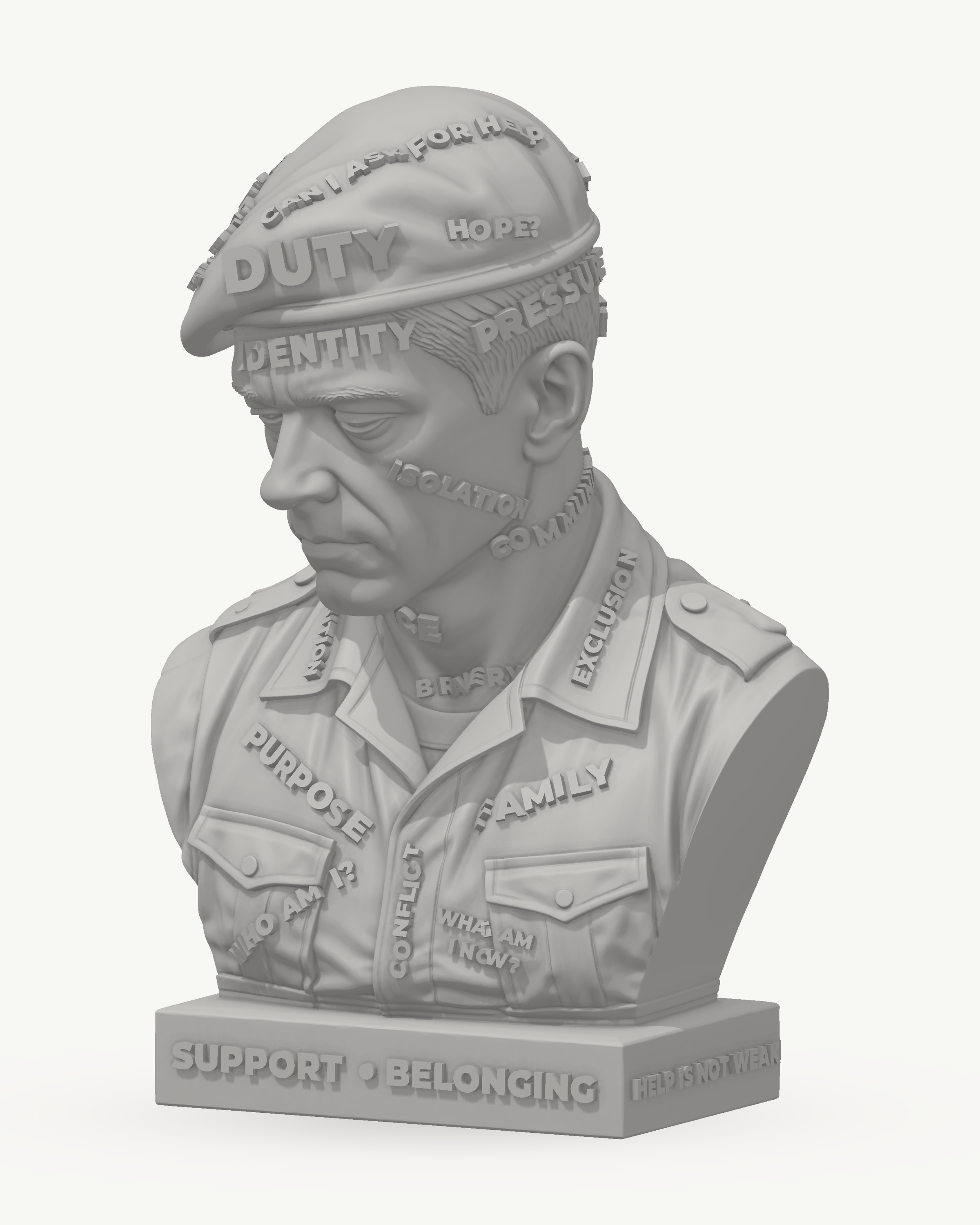
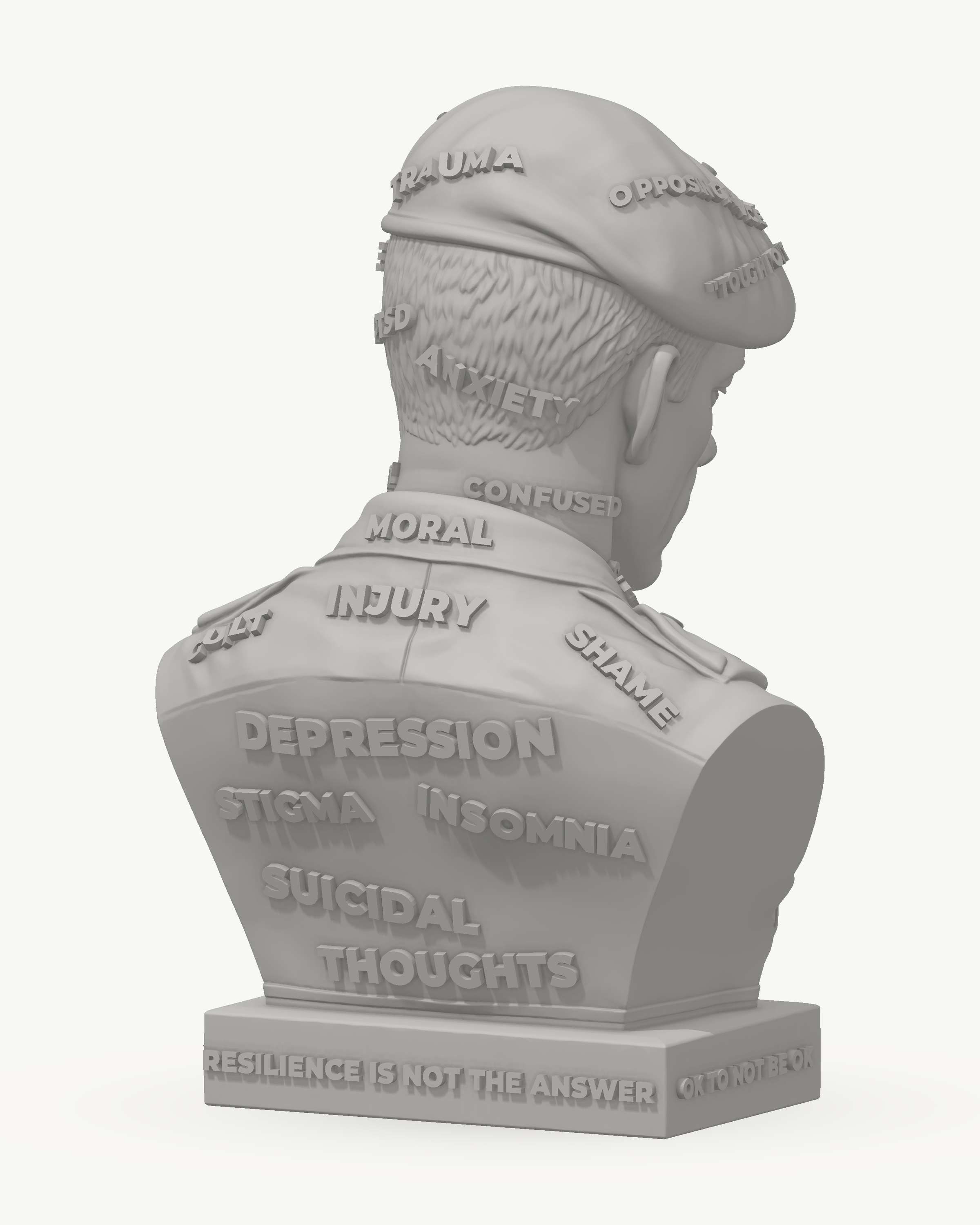
I have designed a new 3D-printed military bust for exhibition at the Byres Community Hub, within the University of Glasgow’s Clarice Pears Building, as part of this year’s Scottish Mental Health Arts Festival. It brings together several strands of my work: military history, suicide research, occupational health and the current veteran mental health project I am working on with colleagues at CRSU.
Across the figure are words about duty, identity, purpose and belonging, alongside pressure, isolation, trauma and suicidal thoughts. I want people to spend time with those words, walk around the bust and consider what a uniform tells us about a person, and what it leaves unseen.
From Scottish Hazards to military life
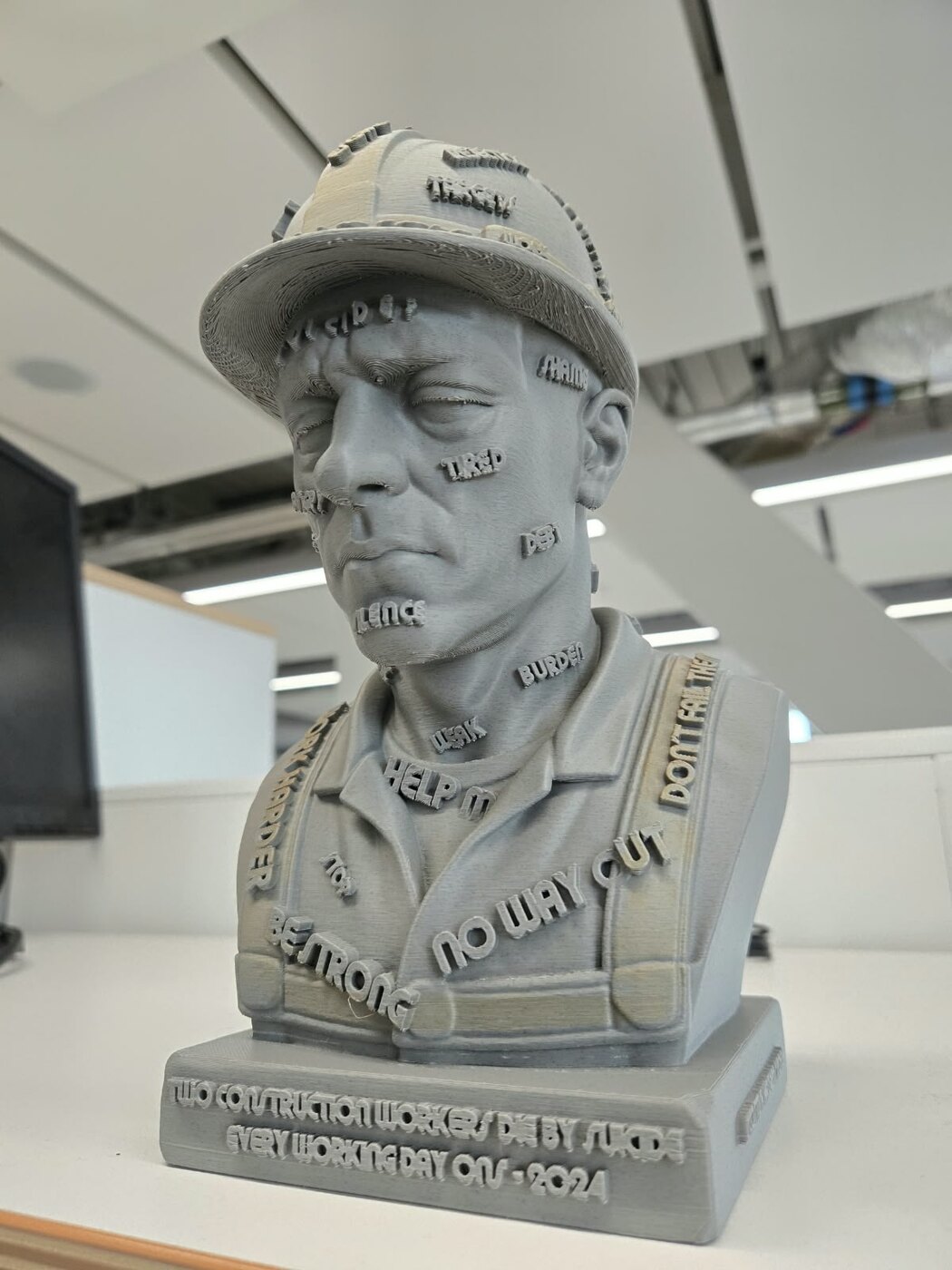
This follows the SOLVE construction bust I created for Scottish Hazards. On 9 September 2026, I joined them at the Scottish Parliament during their three-day exhibition marking World Suicide Prevention Day on 10 September.
I spent the day speaking with MSPs and parliamentary staff about suicide prevention, new prevention approaches and my research into occupational suicide among veterans and nurses. We exchanged contact details and arranged follow-up conversations. The bust was well received, and that experience encouraged me to develop the approach further.
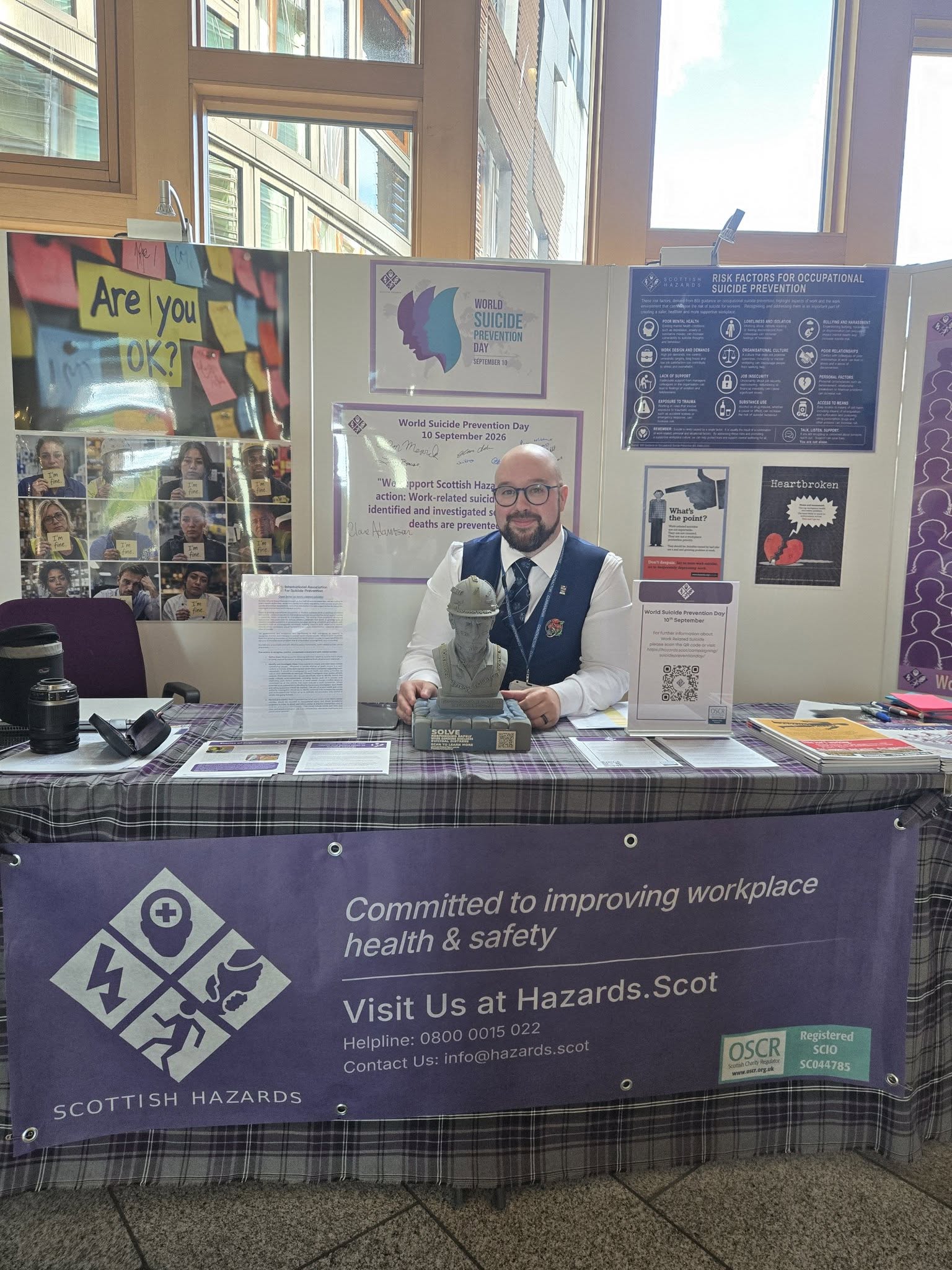
In my Facebook post on 9 September, I wrote that the day had made me feel that “we can actually change things for people who need help”. I spoke about building new safety nets and support structures to help people cope and survive. That is what I want this work to contribute to.
For me, the value of a physical piece is the shared starting point it offers. Two people can stand beside it, notice different words and begin talking about why those words matter. That is the kind of public engagement I want to develop: something people can approach, question and connect with their own experience.
The connection between the two busts is also a connection between areas of my research. Military service is a form of work, with its own relationships, hierarchies, expectations and demands. Questions about health, identity, power and responsibility run through both occupational and military life.
The words on the body
The military bust places supportive and difficult experiences alongside one another. Family, community and belonging have a place here, as do anxiety, depression, shame and moral injury. The questions “Who am I?” and “What am I now?” invite reflection on identity and change, including the transition out of service.
One figure cannot represent every serving person or veteran. The intention is to make room for different experiences and encourage discussion of the conditions in which people live, work and seek support.
The phrase “RESILIENCE IS NOT THE ANSWER” on the plinth is deliberately provocative. My point is that resilience cannot carry responsibilities that belong to institutions, services and wider society. Coping skills may matter greatly to an individual. We also need to ask whether their circumstances can change, whether support is accessible and what happens when they ask for help.
Research across a century
As a medical military historian and suicidologist, I have spent years examining the relationship between military institutions and the people within them. My book Physical Control, Transformation and Damage in the First World War: War Bodies examines how military service shaped soldiers’ bodies and experiences, and the physical and psychological consequences of that control.
My article Toughening Up: Bullying in the British Army during the First World War explores humiliation, coercion and abuse within recruitment, training and military life. It raises difficult questions about behaviours justified as preparation or discipline, and about whose account of an experience is accepted.
These concerns also run through my 2019 chapter “Silent Deaths”: British Soldier Suicides in the First World War, in War Hecatomb, and Silent Voices, my book in progress on a long century of British military suicide. And yes, the book is still in progress. It remains work I want to finish.
I have tried to bring these questions into public discussion too. In TIME in 2019, I argued that addressing veteran suicide requires acknowledging its history. My writing for The Conversation has explored military suicide, recruitment and the treatment of soldiers’ bodies. The bust offers another way into that continuing conversation.
Accuracy matters here. A UK cohort study published in 2023, examining people who left the Armed Forces between 1996 and 2018, found that the overall suicide rate was slightly lower than in the general population, while risk was higher among veterans aged under 25 than among people of the same age in the general population. Broad labels can conceal differences that matter for prevention.
For me, recognising those differences is part of taking military suicide seriously. We need to understand people’s circumstances and experiences, while avoiding a portrayal of veterans as an inevitably damaged group.
The current CRSU veteran mental health project
That concern connects directly with my current work in the NIHR Evidence Synthesis Group at CRSU, the Complex Reviews Synthesis Unit. With colleagues at the University of Glasgow, I am working on Modifiable Factors Associated with Good Mental Health Outcomes in Veterans, an NIHR-funded review developed with involvement from the Ministry of Defence and the Office for Veterans’ Affairs.
We are asking what helps veterans maintain or regain good mental health, including following trauma, and which of those factors can be changed or supported. The review brings together quantitative, qualitative and mixed-methods research, including evidence relevant to serving personnel and reservists before they leave service.
That means examining individual experiences alongside relationships, family and community connections, and the organisation of services. Purpose, belonging, continuity of care and trust are among the factors the review is set up to investigate. The aim is to understand how these influences operate in context and what the evidence can usefully tell policymakers and those designing support.
The review is ongoing. The bust is a creative response to questions running through this work, and a way of bringing those questions into a public space while the research continues.
Bringing the conversation into the Hub
The Scottish Mental Health Arts Festival runs from 19 October to 8 November 2026, exploring the theme of Reflections. It feels an appropriate setting for a piece that asks people to consider the stories and assumptions they bring to a military figure.
I am looking forward to sharing the bust at the Byres Community Hub, in the Clarice Pears Building at 90 Byres Road, Glasgow. I hope it gives serving personnel, veterans, families and other visitors a reason to pause and talk about what support means in practice.
The words “support” and “belonging” sit at the base of the bust. My argument is that they should also sit at the foundation of how we respond.
The veteran mental health review is funded by the NIHR Evidence Synthesis Programme, NIHR173139. The views expressed are those of the author and not necessarily those of the NIHR or the Department of Health and Social Care.
If this piece brings up difficult feelings, Samaritans offers free support, day or night, on 116 123.


Leave a Reply