

Getting back to work after COVID-19 can be one milestone in recovery. Managing a full shift when you are still exhausted or struggling to concentrate is another. Our new study looked at both sides of that experience. We asked how often people missed work because of their health and how often their health made work harder while they were there.
I worked on the study with Dr Sergio Vargas-Prada, Research Assistant Effie Assan and Professor Ewan Macdonald through the University of Glasgow’s Healthy Working Lives Group. We analysed survey responses from 1,782 employees at one multinational employer in the UK, India and Brazil. Problems with memory and concentration, often called brain fog, and fatigue were the most commonly reported symptoms among those who reported Long COVID symptoms.
What we found
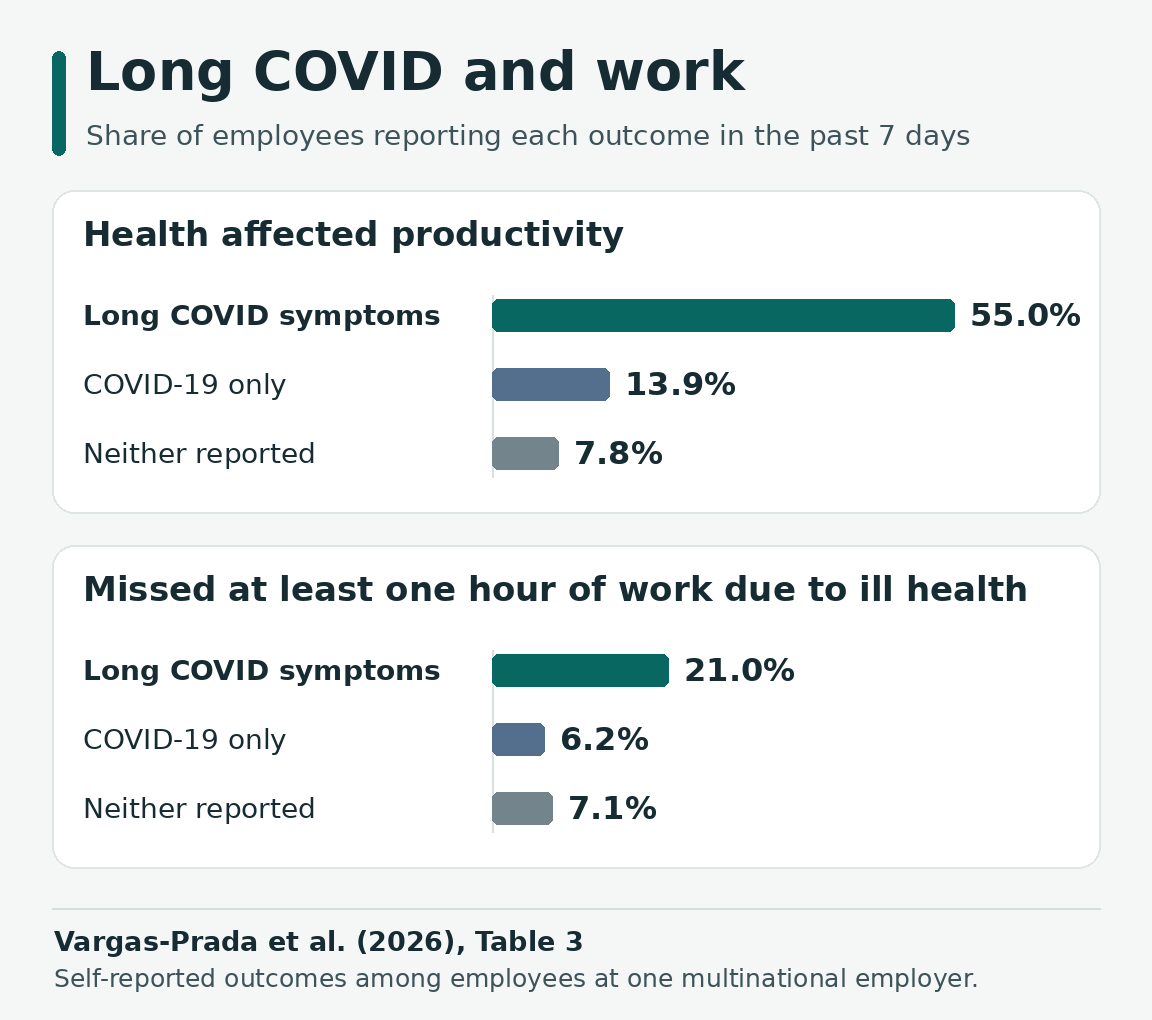
Among employees who answered the productivity question, 55% of those reporting Long COVID symptoms said their health had affected their work in the previous seven days. That compared with 14% of those who reported COVID-19 without ongoing symptoms and 8% of those who reported neither. In the same week, 21% of the group reporting Long COVID symptoms had missed at least an hour of work because of their health, compared with 7% of the group reporting neither.
Both associations persisted after we took account of factors including age, job role, country and existing health conditions. Taking pre-existing mental health conditions into account weakened both associations. Job role and country also made a difference to the estimated association with productivity. We used a one-off survey and grouped people by the symptoms they reported, so the figures describe this workforce and tell us where we saw a link.
What employers can take from this
The finding I keep coming back to is how much an absence record can miss. If someone is back on the rota, it is easy to assume they are managing their usual duties. A conversation about which tasks are hardest, when symptoms get in the way and what could change is a better place to start. That might mean adjusting duties, allowing more flexibility around hours or involving occupational health. Our study points to the need for that support. The next question is which adjustments help people stay in work over time.
If you work in occupational health, manage a team or represent workers, please share the paper with anyone thinking about how to support colleagues living with Long COVID.
Read the open-access paper in English or view the University of Glasgow record.
You can find more of my research on my Publications page and at simonhwalker.com.


Leave a Reply