
Putting the Development Back into CPD
Dr Si Walker | Healthy Working Lives Group, University of Glasgow
I love teaching. I have been doing it for over a decade now, across different subjects, institutions and groups of learners, and one of the things I enjoy most is finding new ways of helping people engage with ideas. Back in 2019, I wrote an article about pedagogical practice that ended with a fairly straightforward suggestion: “Dump the PowerPoint, and let’s do something more interesting.” Seven years later, I still stand by that sentiment, although I should probably clarify that I have nothing against PowerPoint. I use it regularly, and I suspect Microsoft would be rather upset if academics collectively abandoned it. My issue has never really been the technology itself, but how we use it, and more importantly, what we expect learners to get out of the experience.

This is something I have been thinking about considerably while working with colleagues in the Healthy Working Lives Group (HWLG) at the University of Glasgow. Over the past few years, I have been involved in redesigning and developing elements of our continuing professional development (CPD) provision, particularly our occupational health diploma preparatory courses. My contribution has focused on pedagogy, digital learning design and developing more interactive ways of delivering educational material. Working alongside colleagues with extensive clinical and occupational health expertise has given me an opportunity to explore how established educational principles can be combined with modern technology to create learning experiences that are informative, engaging and, importantly, relevant to professional practice.
From passive learning to active participation
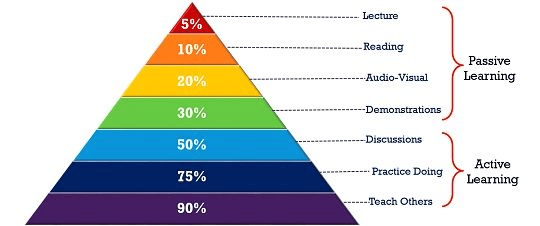
One of the fundamental challenges in education is that providing information is not the same as developing understanding. We have all experienced lectures where the presenter moves through an impressive number of slides, occasionally asking whether anyone has questions, before concluding that the absence of a response means everyone has understood everything perfectly. Of course, the alternative explanation is that everyone has mentally relocated to somewhere more interesting, possibly with a beach and reasonably priced cocktails. Or, in my case, my dream job as pilot of Thunderbird 2. (BTW I asked AI to make me the pilot of Thunderbird 2 – and it just couldn’t even imagine my worthlessness in a position of responsibility).

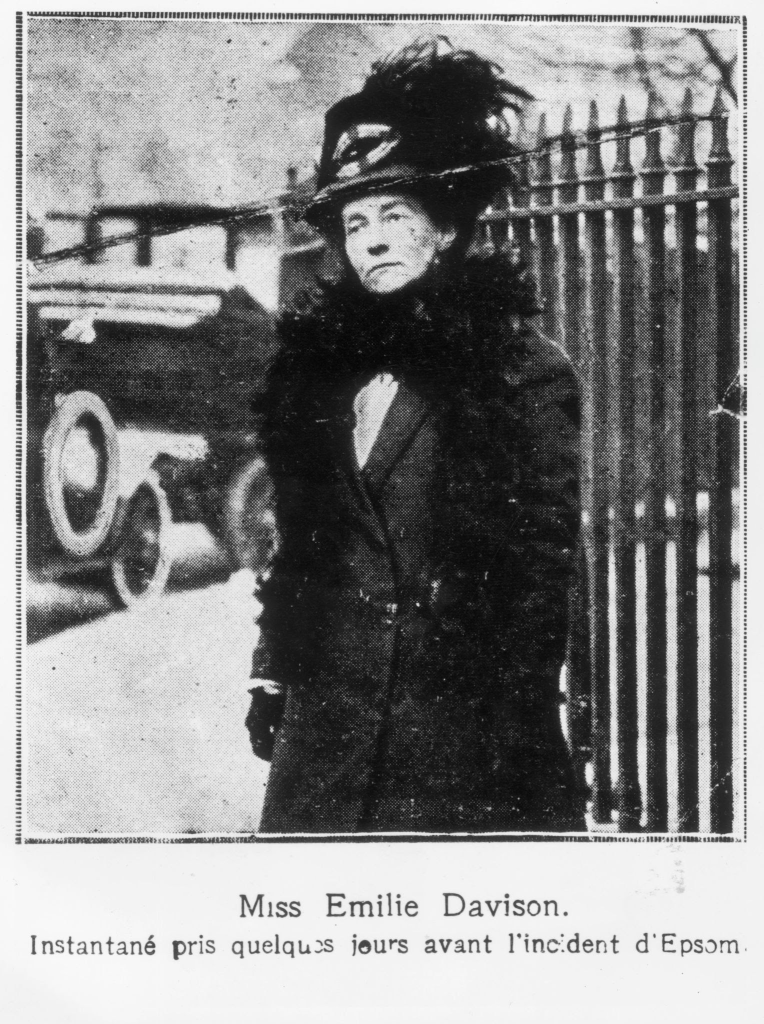
That is not an argument against lectures. I love delivering them, I often use them as an opportunity to try out low level stand-up routines, and I even try to enjoy listening to a good one (typical academic). They remain an important part of teaching, particularly when introducing complicated concepts or drawing together substantial bodies of evidence. However, learning also requires opportunities to question, apply and reflect upon that information. The work of John Biggs on constructive alignment (1996), for example, provides a useful foundation for thinking about the relationship between learning outcomes, teaching activities and assessment. Put simply, if we want somebody to demonstrate a particular skill or understanding, we need to design opportunities for them to develop it. Sometimes the best way to learn is by doing.This is not a new revelation, but I can’t claim to have invented active learning. In fact, some of my earlier teaching experiments involved turning history students into detectives to investigate the death of suffragette Emily Wilding Davison. Rather than simply presenting the historical evidence, I asked them to examine it, challenge interpretations and develop their own conclusions. The historical knowledge remained central, but the way they encountered and worked with it was rather different. It was an approach I thoroughly enjoyed, and it helped shape my thinking about how educational activities could encourage curiosity and critical engagement.
Taking those ideas into occupational health education
Moving into the development of CPD for occupational health professionals presented a different, but equally interesting, challenge. Unlike students encountering a subject for the first time, our participants often arrive with considerable professional experience, established responsibilities and their own understanding of how healthcare operates in practice. We are not simply introducing them to new information. We are helping them develop and extend knowledge that needs to be applied within complicated clinical and workplace environments.
At HWLG, our combined preparatory programme supports professionals working towards the Faculty of Occupational Medicine’s Diploma in Occupational Medicine and Diploma in Occupational Health Practice. The courses bring together substantial clinical and academic expertise, providing a foundation in areas including occupational hazards, fitness for work, rehabilitation, legislation, ethics and professional decision-making. The challenge from my perspective has been to consider how we can present and structure that expertise in ways that support learning, rather than expecting participants to absorb an enormous quantity of material and somehow transform it into professional judgement.
Working with colleagues, I have been developing the digital learning structure through Moodle, combining recorded teaching with interactive activities, structured resources, opportunities for reflection and practical exercises. This includes using multimedia resources, knowledge checks and tools such as H5P to create opportunities for learners to engage with course material rather than simply watch it. The trick here is not to drown learners in videos. Simply putting more recordings online does not necessarily mean we are providing a better educational experience. Small design decisions can make a considerable difference to how a course feels and operates, from the organisation of resources to the questions participants encounter as they progress through a topic.

There is also a practical reason for considering this carefully. Many of our participants are working clinicians, often balancing study alongside demanding professional and personal commitments. Giving them flexibility is important, but flexibility should not mean leaving them alone with a mountain of recordings and hoping for the best. A well-designed digital course needs to provide structure, direction and opportunities for interaction, even when learners are working independently.
Bringing the workplace into the classroom, without actually bringing in a forklift
One of the more interesting aspects of this work has been exploring how technology can support practical and experiential learning. Occupational health is particularly well suited to this approach because so much of the profession involves interpreting the relationship between people, work and their working environments. Understanding the principles of workplace risk assessment is important, but recognising how those principles apply to a noisy factory, a busy hospital ward or an office with questionable ergonomic arrangements requires another level of reasoning.
Our existing programme incorporates bespoke workplace videos and case-based exercises to support hazard identification, risk assessment and professional decision-making. I have been building on these approaches through the development of interactive workplace environments, allowing us to explore how participants might encounter and investigate occupational settings digitally. These developments include simulated environments representing different types of workplaces, with the intention of giving learners opportunities to identify risks, consider available evidence and work through practical decisions.
The point is not simply to make something impressive to look at. There is little educational value in creating a beautiful virtual factory if all the learner does is wander around it admiring the machinery. The important question is what the environment enables the participant to do. Can they identify a potential hazard? Can they explain why it matters? Can they recognise when there is insufficient information to reach a conclusion? These are the elements that can connect the digital experience with the professional reasoning required in practice.
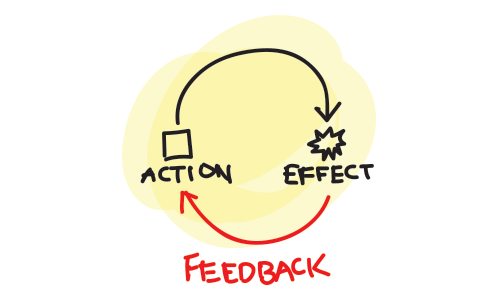
This approach draws on the broader principles of experiential and situated learning, including work by Yardley, Teunissen and Dornan (2012) on the relationship between professional learning and experience. Digital environments cannot reproduce every aspect of a real workplace, nor should they be presented as substitutes for practical assessment where this is required. However, they may provide valuable opportunities to rehearse elements of professional reasoning in a controlled environment, particularly when supported by discussion, feedback and reflection.
Technology is a tool, not the teacher
It would be easy to present this work as a story about technological innovation, particularly given the extraordinary speed at which digital tools are developing. We now have access to systems capable of producing interactive materials, supporting multimedia development and creating increasingly sophisticated simulated environments. Artificial intelligence adds another set of possibilities, although its educational value, reliability and appropriate role require careful consideration and ongoing monitoring. Technology is a tool, not the teacher, although I will admit to having been called a tool on more than one occasion.
I find these developments fascinating, but i’m also cautious about allowing the technology to become the purpose of an educational activity. An interactive exercise is not necessarily better than a lecture, just as a digital simulation is not automatically better than a conversation with an experienced practitioner. There is also a danger of confusing novelty with effectiveness. Just because something moves, flashes or gives us the opportunity to press a button does not mean it represents a meaningful improvement in learning. Otherwise, we could probably award CPD credits for playing video games, which would certainly make my evenings more productive. Note to self: see if I can get CPD for Fallout and Factorio.
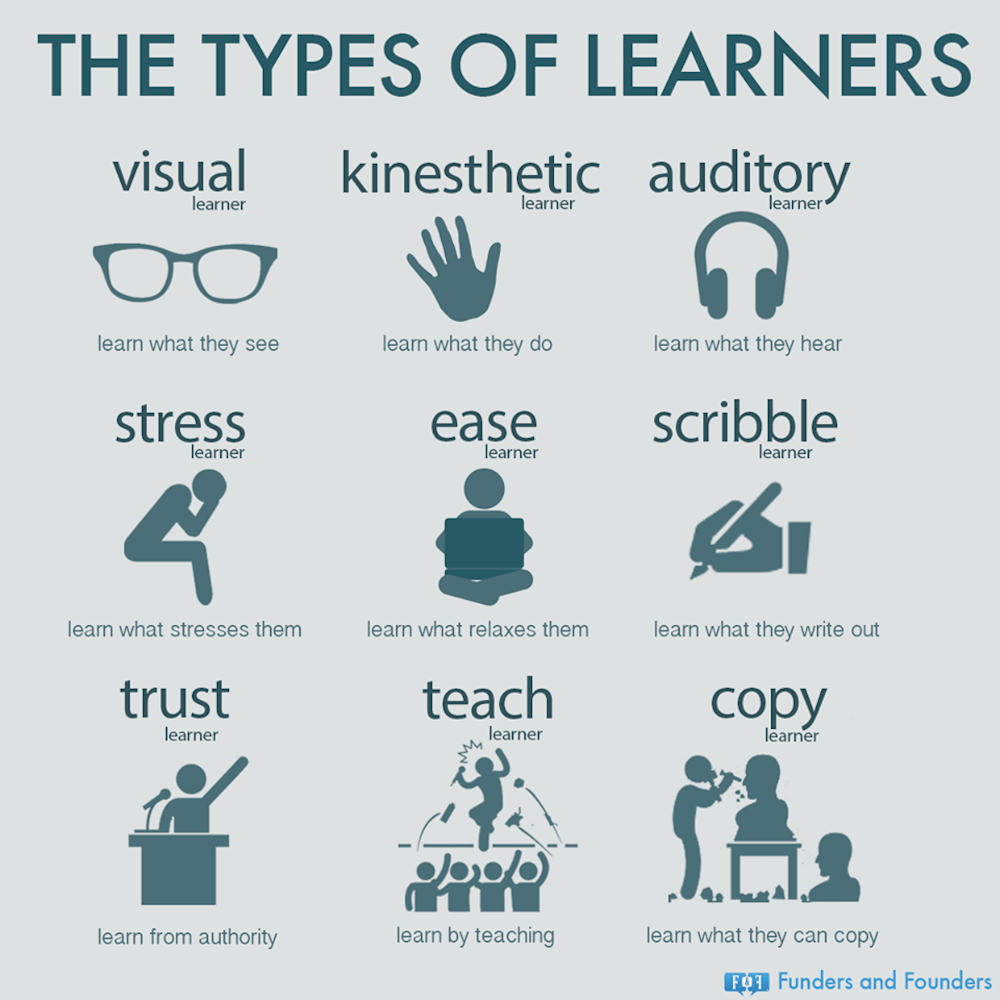
For me, educational design begins with what we want participants to understand and how we want them to use that knowledge. Technology then becomes one of the ways we might achieve those aims. Sometimes that means developing a more complicated interactive resource. At other times, it means simplifying an explanation, reorganising material or making better use of an existing learning activity. There is also an important accessibility consideration. People engage with information differently, and digital provision can offer opportunities to structure learning through different formats and approaches. Recorded explanations, visual material, written resources and interactive exercises can complement one another, although their presence alone does not guarantee accessibility. These decisions need to be considered as part of the design process rather than as an afterthought.
But does any of this actually make us better at our jobs?
This is perhaps the most important question, and one we should be asking more often when discussing CPD. We can create attractive learning environments, provide engaging activities and receive positive feedback from participants, but none of those things automatically demonstrates that professional practice has improved. Enjoying an educational experience is valuable, particularly when it helps sustain engagement, but enjoying something and learning something are not necessarily the same thing. The literature on the transfer of training, including the influential work of Baldwin and Ford (1988), provides a useful reminder that moving from education into professional practice is not a straightforward process. Whether somebody applies what they have learned depends on several factors, including the learning experience itself, opportunities to use that knowledge and the environment in which they work. This is particularly relevant to occupational health, where professional decisions are influenced by clinical considerations, legislation, organisational arrangements and the practical realities of individual workplaces.
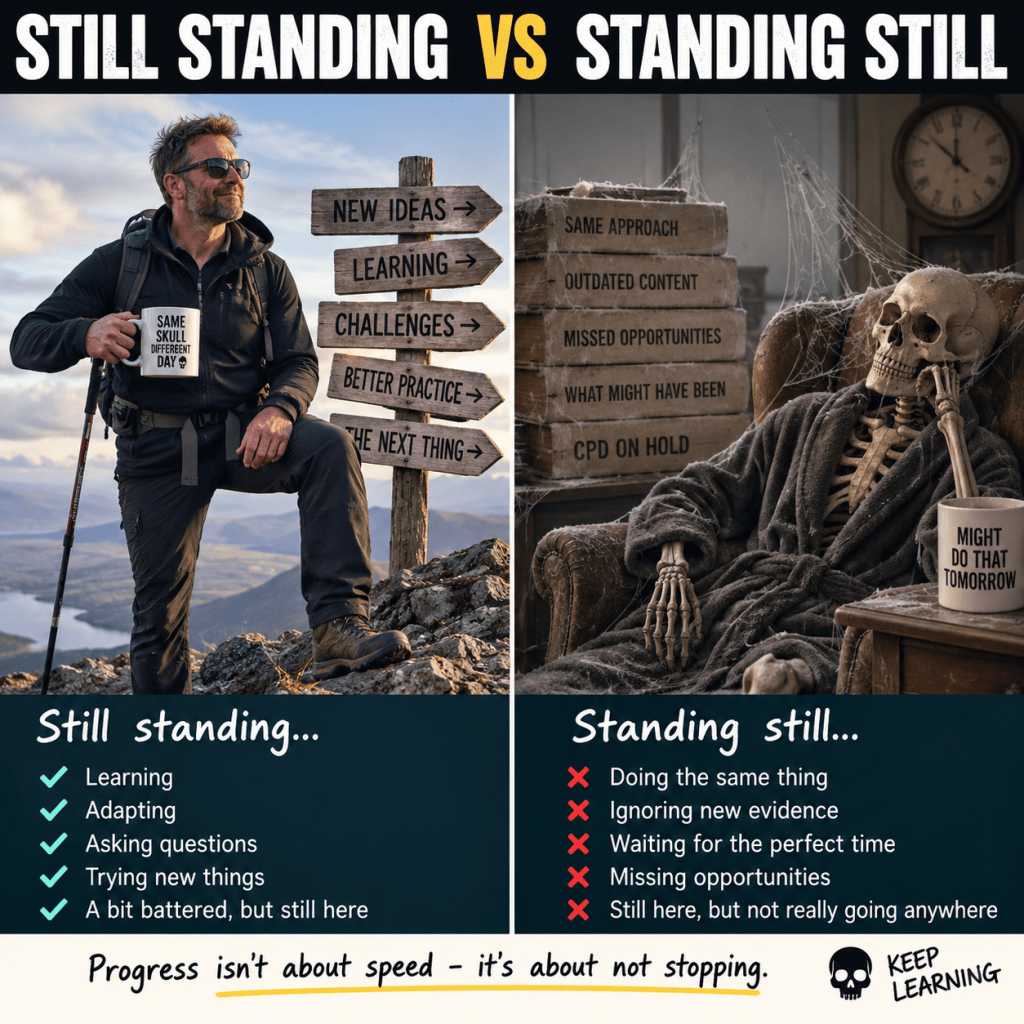
Stagnation is a killer here. Professional knowledge does not stand still, and neither should the education intended to support it. When evidence develops, working practices change or new problems arise, CPD needs to respond. Otherwise, we risk presenting yesterday’s material as preparation for tomorrow’s decisions. Equally, adding more content to a course is not the same as improving it. Development needs to be purposeful, for learners as well as educators. For our courses, I see this as an opportunity for further development and evaluation. We should be interested in how participants engage with the materials, what they find useful and how confidently they can apply their understanding to realistic problems. More importantly, where feasible, we should examine what happens after they complete their learning. Has their approach to a workplace assessment changed? Are they more confident in explaining professional advice? Have they incorporated new evidence or approaches into their work?
These questions require evidence, and I would not suggest that our redesign has already demonstrated improvements in professional outcomes. What we have developed is an educational approach intended to support those outcomes. Evaluating whether it achieves them is an important next step, and one that offers opportunities for further collaboration between educational researchers, occupational health specialists and CPD participants themselves.
Continuing to learn about learning
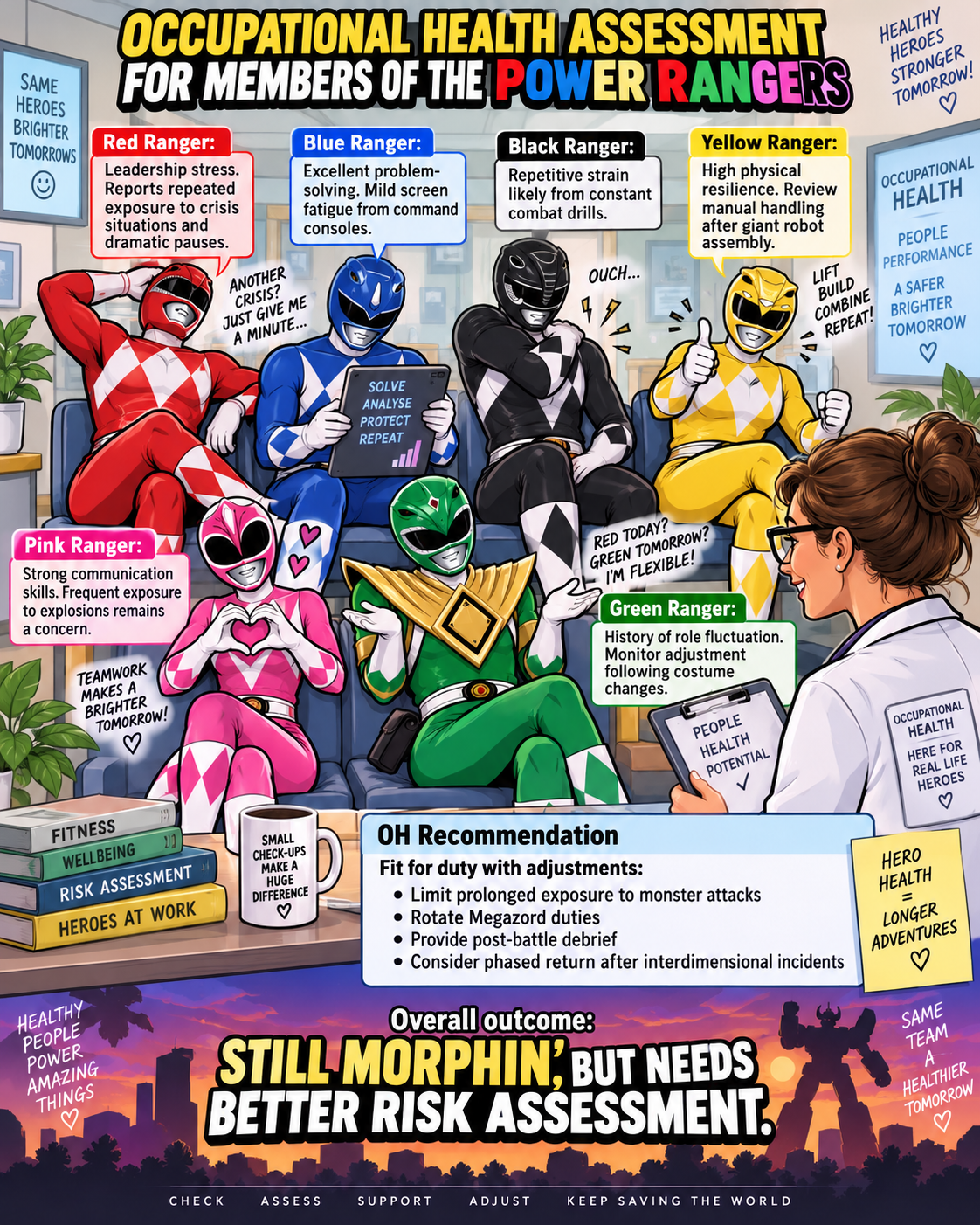
One of the things I appreciate about working within HWLG is the combination of expertise available to us. Our clinical colleagues bring decades of professional experience, our research connects occupational health with wider questions about work and wellbeing, and our teaching provides an opportunity to share that knowledge with professionals who will use it in their own settings. My role within that process has been to contribute a different perspective, drawing on my experience of teaching, educational theory and digital development to consider how we can communicate that expertise effectively. I do not think there is a single perfect approach to teaching, and I certainly do not believe that technology provides a universal answer. Good education requires us to remain curious about how people learn, willing to test different approaches and prepared to acknowledge when something does not work as intended. This applies just as much to the educator as it does to the learner. I am still experimenting, developing and occasionally discovering that something which seemed brilliant in my head works rather less brilliantly when introduced to an actual human being. However, my use of occupational health assessment for members of the Power Rangers as a teaching method has become legendary.
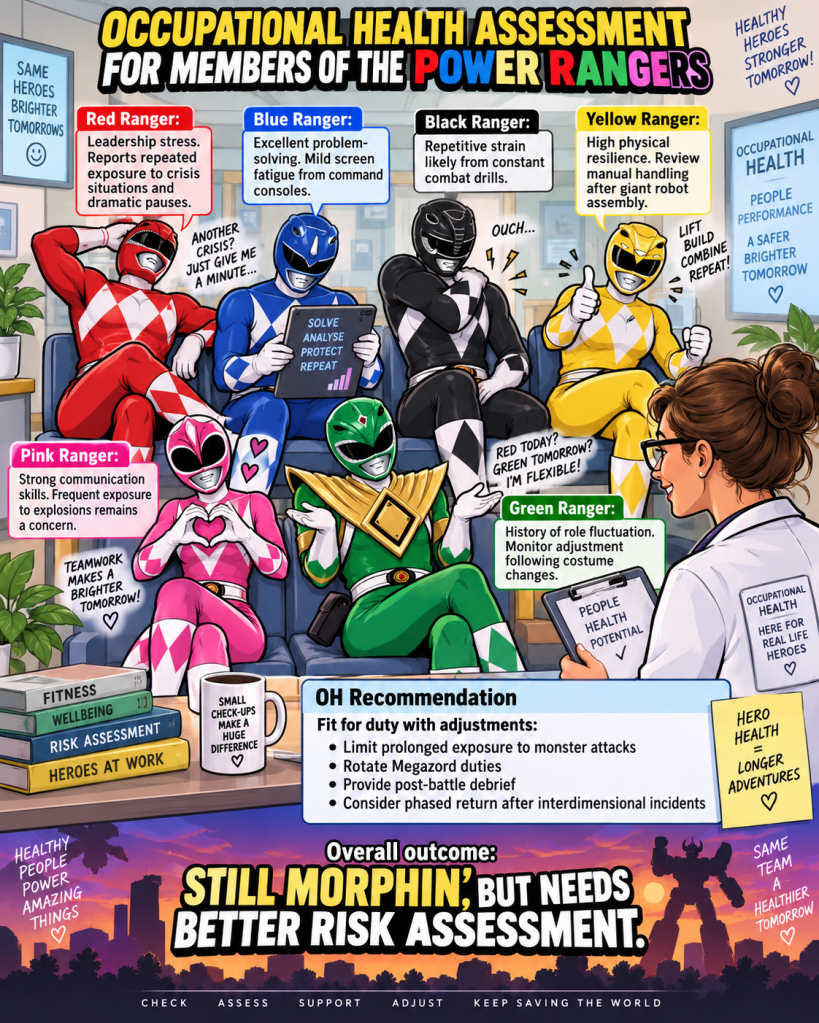
Nevertheless, the possibilities are exciting. The continued development of interactive resources, workplace simulations and digitally supported professional education offers opportunities to make CPD more responsive to the people undertaking it and the environments in which they work. My ambition, alongside colleagues at HWLG, is to keep exploring these approaches while maintaining the academic standards, professional expertise and evidence-informed practice that underpin our teaching. Ultimately, I want our participants to leave with more than a certificate, a collection of notes or the satisfaction of surviving another online course. I want them to have enjoyed the process of learning, challenged some of their existing assumptions and developed knowledge they can use in practice.
Because if continuing professional development is not helping us continue to develop professionally, we have rather missed the point.
Further reading
Biggs, J. (1996). Enhancing teaching through constructive alignment. Higher Education, 32, 347–364. https://doi.org/10.1007/BF00138871
Yardley, S., Teunissen, P. W. and Dornan, T. (2012). Experiential learning: AMEE Guide No. 63. Medical Teacher, 34(2), e102–e115. https://doi.org/10.3109/0142159X.2012.650741
Baldwin, T. T. and Ford, J. K. (1988). Transfer of training: A review and directions for future research. Personnel Psychology, 41(1), 63–105. https://doi.org/10.1111/j.1744-6570.1988.tb00632.x
Read more: Healthy Working Lives Group and occupational health diploma preparatory programme.


Leave a Reply